When to visit
Death Valley gets some of the hottest summer weather on Earth. Winter is cool, and spring and fall are the easiest seasons for walking and driving.
| Season | What to expect | What to do |
|---|---|---|
| Summer | Days can reach 45 °C (113 °F). | Go out early and in the evening. Keep afternoon trips short. |
| Spring | Warm days and cooler nights. Wildflowers appear in good years. | Walk the trails early. Look for wildflower reports before you go. |
| Fall | Days cool down steadily through the season. | Plan the longer walks and drives. |
| Winter | Days are cool and nights are cold. | Bring warm layers for the evenings. |
What the heat means in practice
In summer the useful hours are early morning and the hour before dark, which is enough time for one stop, not three. A car left in the sun gets hot enough that the steering wheel is hard to hold, so park facing away from the afternoon sun where you can. Beatty sits higher than the valley floor, so nights in town are a little cooler than at Furnace Creek.
Wildflowers
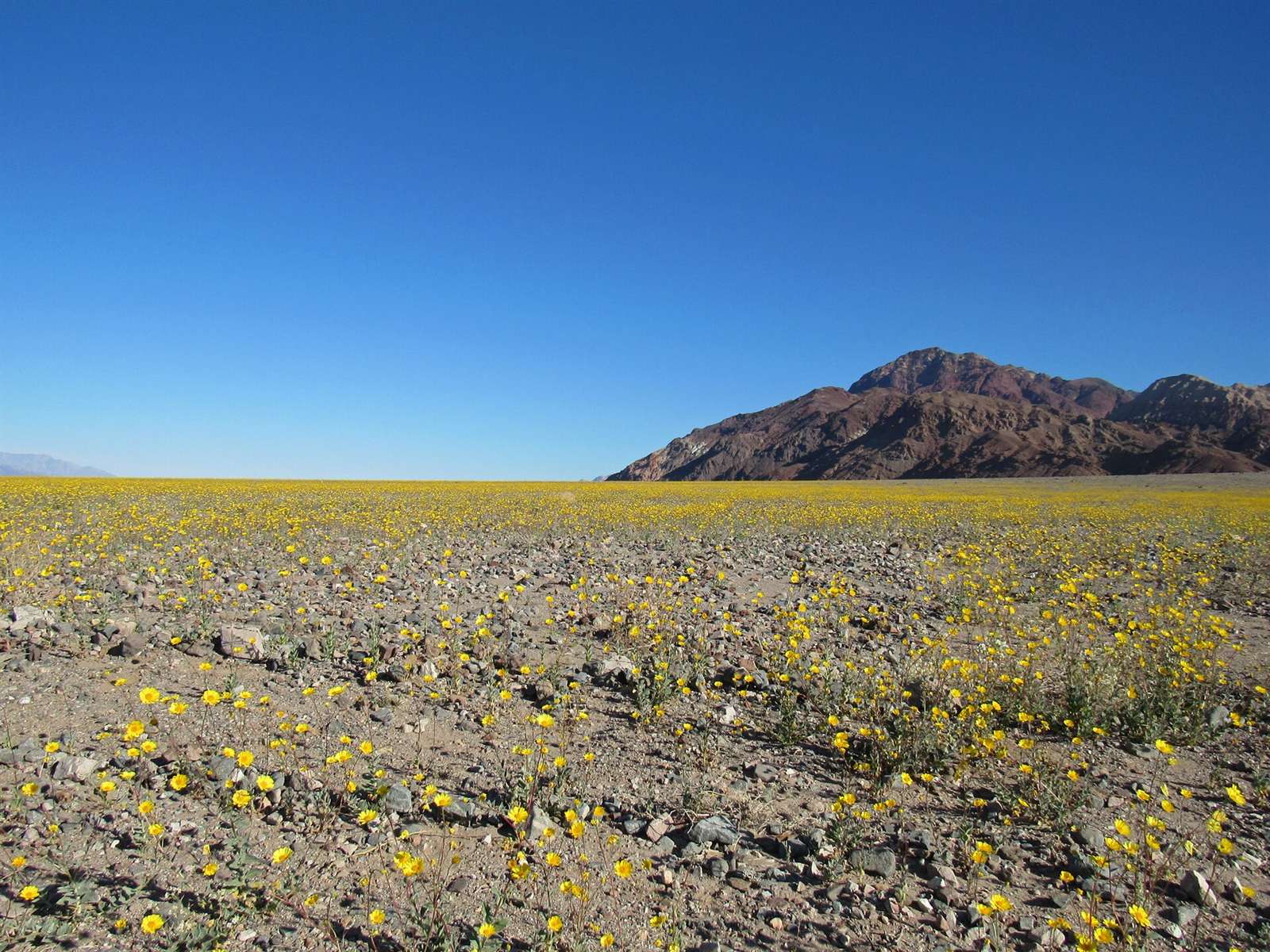
Wildflower blooms depend on winter and spring rain. Some years bring a carpet of yellow flowers, and some years bring very little. Check the National Park Service website before you plan a trip around the flowers.
A winter view
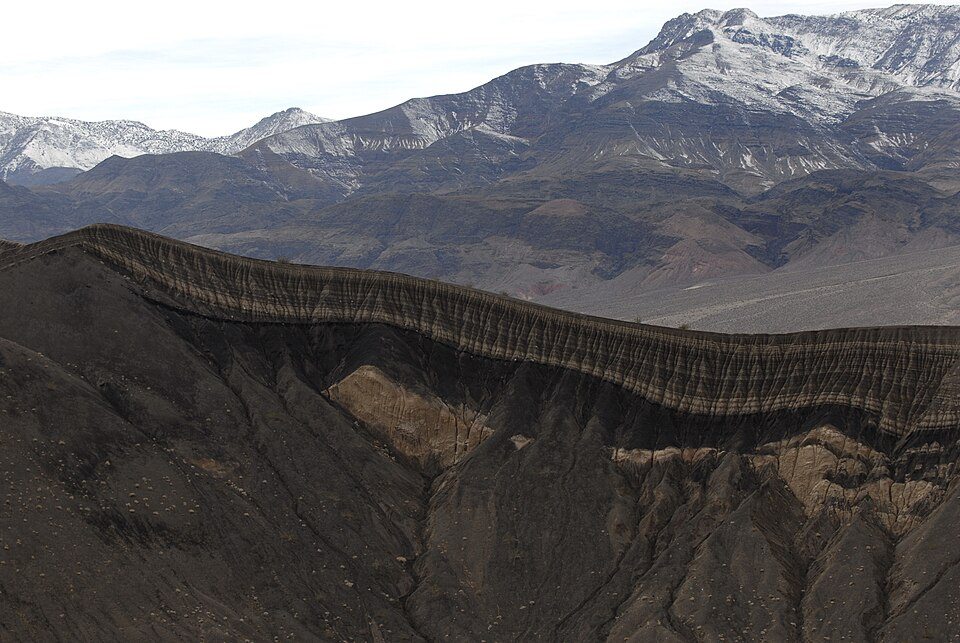
Snow sometimes covers the higher peaks around the park in winter. This photo was taken in December at Ubehebe Crater.